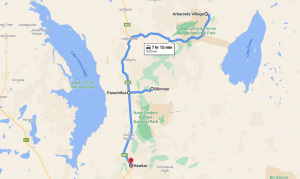
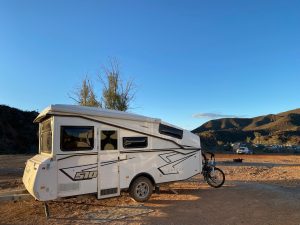
We always tried to avoid long stretches of unpaved roads as visions of red dust infiltrating our brand new Clam weren’t pleasant. This thought prevaded our minds as we ventured deeper into the Flinders. We reallyreally wanted to visit Arkaroola but all routes in to this remote location are unpaved. We queried every local resident and caravan occupant we met about their knowledge of the best route option but the results were decidedly inconclusive. We gave in and chose the longer but more well-traveled route. The short section from Blinman through the pretty Parachilna Canyon was a well-maintained surface so we were hopeful for more of the same on the longer Copley to Arkaroola stretch. At Leigh Creek (pop. 245) on the paved Outback Highway we stopped for fuel since this would be our last opportunity until we returned a few days later. It was noon on Saturday and I saw that a Foodland here would close in less than 30 minutes. So we rushed over to get supplies we might need for three days, not trusting Arkaroola Village to have much (which was true unless you like baked beans). We were manic trying to plan what we’d cook and buy the necessary items before they locked the doors.
The Arkaroola Wilderness Sanctuary was established in 1968 by the Sprigg family who purchased the pastoral lease on the 240 square miles. The land has always been marginal due to the low annual rainfall and attempts to settle it over the past 150 years have always been unsuccessful. Uranium mining was banned by SA after years of exploration and a large chunk of the property is now freeheld. It continues to operate with a strong emphasis on science, education and conservation to enable us, as custodians, to preserve this priceless and unique wilderness and its inhabitants into the future. The spectacular rugged landscapes were the main attraction for us.
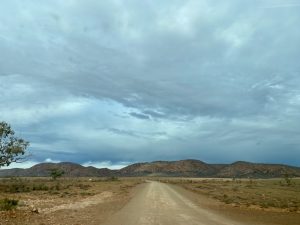
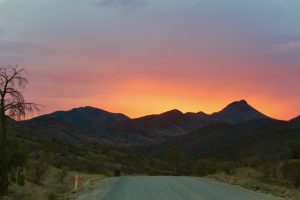
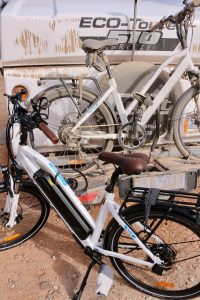
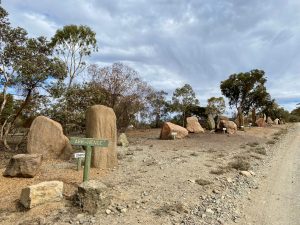
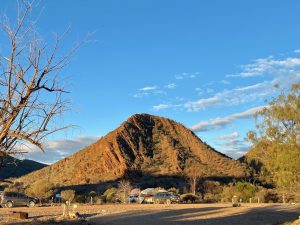
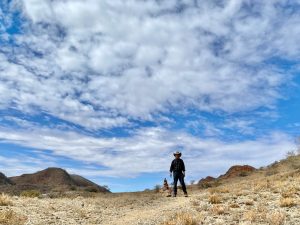
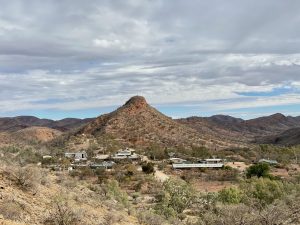
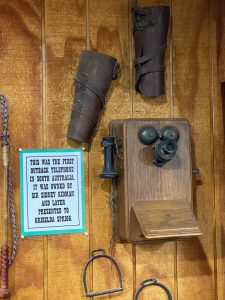
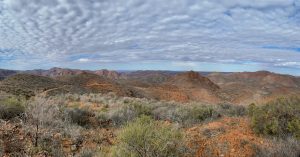
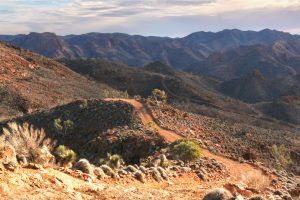
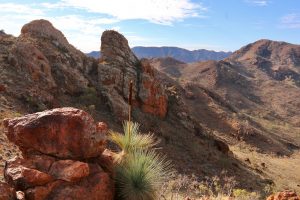
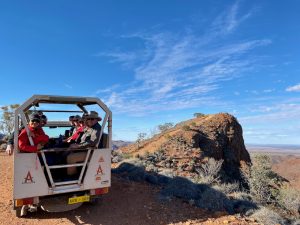
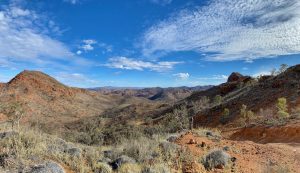
From the sheep station at Blinman to Arkaroola we had a choice of two quite different routes: 210 km from Blinman to Arkaroola with only 50 km paved; or 150 km of totally unpaved road in questionable condition from Blinman to Arkaroola.The road in to Arkaroola looks benign at the start. It is not strictly 4WD but so corrugated our teeth chattered. Our new Kia could handle the trembling but we were concerned about the Clam rattling apart. The ride was especially noisy with the motion of pots, pans and dishes in the Saliba’s Transit campervan; Karin asked to ride with us when we stopped to check on them.The 130 km drive took 4 hours. Seeing this sunset on the final approach to Arkaroola helped take the pain away. The hues in the hills were as beautiful as the sky. However, by the time we checked-in it was last light and pulling into our awkward site was such a nightmare that a band of neighbours came to assist.The next morning revealed the fact that my bike has stayed clean stored inside the Clam during travel, while Joe’s had to brave the dusty conditions on the rack on the back of the Clam.Ark-henge, Stonehenge…what’s the dif??? A humorous approach to this outback resort.Griselda’s Hill is named for the pioneer matriarch of the Sprigg family who lived on the property until her death in 2003.Griselda’s Trail is a short but steep track to the peak. Joe has the look of a stockman here. Could he be wearing a holster and pistol around his waist?Arkaroola Village is not terribly impressive looking with it’s rudimentary buildings but we aren’t there for the Village. They offer fuel in this remote outpost but the “store”…well let’s just say you would not survive two days on their inventory. I wonder what the residents do. The last census reported a population of 54. No doubt they are employees of the resort.This sign says it all.Looking south over the Arkaroola Wilderness Sanctuary.It’s nowhere near the summer temps of 45C (113F) but still pretty warm to hike these hills so in order to get the best flavour of the surroundings we took the Ridgetop 4WD tour of the property.The Ridgetop country is the oldest part of the Flinders Ranges. At 1.5 million years of age, the terrain is predominantly granite. Professional geologists and university students regularly come to study these parts.
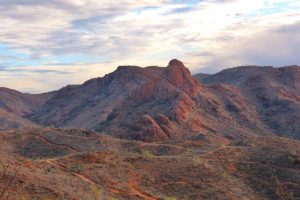
Sillers Lookout, the outcropping to the right of our jeep, is the highest point in Arkaroola accessible by 4WD. Some of the roads are so steep and rocky we were holding our breath and gripping the roll bars as our guide skillfully climbed them. A set of tires will last less than 2,000 km.
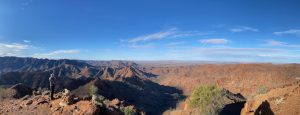
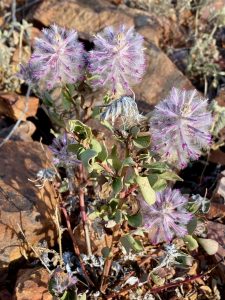
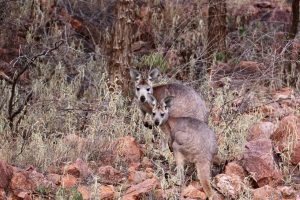
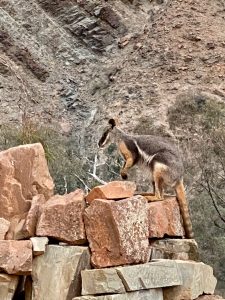
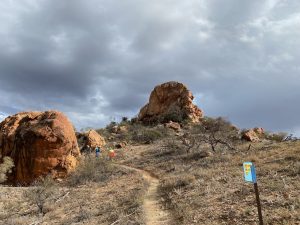
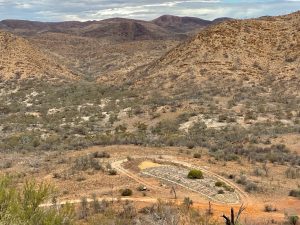
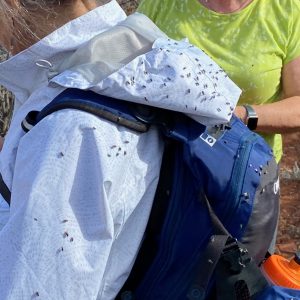
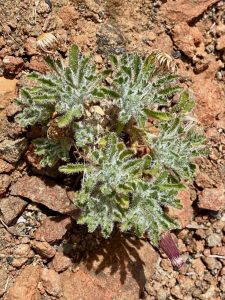
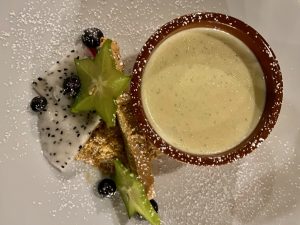
Lookout towards Lake Frome in the distance. The 100 km long/40 km wide lake is an unvegetated salt pan.The Mulla Mulla is a common plant that can survive the arid climate. Still, it has a short lifespan.It’s not all that easy to sight kangaroos and other wildlife in this setting in which they blend so well. This trio did not appear particularly phased by our presence.As a wildlife sanctuary, Arkaroola is host to a wide variety of native flora and fauna with some species only found in this area. Pictured here, the endangered yellow-footed rock wallaby is fed by the Village near sunset each evening and attracts visiting viewers.The Mawson-Spriggina loop walk is 8 km through a valley and then up along a ridge. The trail is well sign-posted and a trail map identifies much of the plant life and significant geologic features along the way.Along the Mawson Valley trailAt the bottom of the image is an oval ‘landscape’ model of Spriggina one of the fossilised segmented flatworms discovered by Dr Reg Sprigg near Lake Torrens to the west. Most details of the worms’ structure were lost in the fossilisation process, but Spriggina appears to have had a front and rear end as shown in this much enlarged model.I had no idea my jacket was covered in flies. Apparently they are attracted to light colours.This unidentified desert plant is so tiny and delicate yet very pretty.The 50-site campground was never overpopulated during our stay but by the time we departed there were only about 8 caravans left.A relaxing meal at the Arkaroola Lodge on our last night resulted in a great dinner finishing with a lemon myrtle panna cotta beyond our expectations.
The climate here is arid. It gets about 250 mm (10 in) of rainfall a year but it may fall in quick, heavy storms and create flash flooding of normally dry creek beds. Our 4WD guide said it had not rained in Arkaroola in 3 months. As a result, water in the showers and laundry is bore water and you can get drinking water by filling bottles but you can’t top up your caravan water tanks.
We love the stark beauty of the Arkaroola region, but we would not enjoy its summers. Our visit here was exceptional and worthwhile but isn’t a place I’d chose for a holiday home.
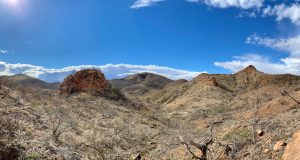
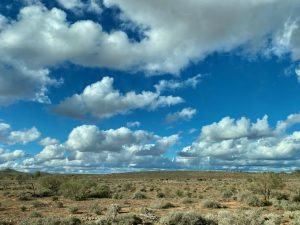
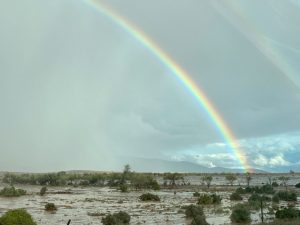
The landscape around here may be like this one minute……And like this the next.
15 thoughts on “Northern Flinders Ranges: Arkaroola”
Fascinating…how do people live there? It’s a tad too remote for me. K
I believe the population in Arkaroola is a constantly evolving lot of backpackers and youngsters on gap years. But with Covid it’s harder to attract workers. There are a few indigenous communities in the area but they are quite small.
Amazing countryside that you experienced. Makes you appreciate all the rain Melbourne has received this winter. Harsh conditions to live in but magical too!
You Vellas are unreal and the shots are fantastic as always. Please take care during these uncertain times and is there a book planned at the end of this adventure tour?
Finally getting caught up on another one of your amazing trips. Thanks for your great photos and commentary. How long will you be on the road and how far will you go?
15 thoughts on “Northern Flinders Ranges: Arkaroola”
Fascinating…how do people live there? It’s a tad too remote for me. K
I believe the population in Arkaroola is a constantly evolving lot of backpackers and youngsters on gap years. But with Covid it’s harder to attract workers. There are a few indigenous communities in the area but they are quite small.
Amazing countryside that you experienced. Makes you appreciate all the rain Melbourne has received this winter. Harsh conditions to live in but magical too!
Agreed! For a short visit it’s worthwhile.
The sky is SO blue – – – beautiful!
Absolutely no pollution in this part of the world!
hard lonely sunburnt country. Thanks for taking me there
Nothing stopping you from a visit!
You Vellas are unreal and the shots are fantastic as always. Please take care during these uncertain times and is there a book planned at the end of this adventure tour?
Thanks, Tony…hope all is well in your part of Melbourne.
Joe & Mary, you two are real adventurers!
Joe & Mary, true travelers. Seeking real adventure!
Finally getting caught up on another one of your amazing trips. Thanks for your great photos and commentary. How long will you be on the road and how far will you go?
As you know now, this is all in the distance past now…well, a few months ago. Just glad you come for the ride whenever, John.
and yes, i want to see the book!!!